Electric cars (EVs) are no longer a futuristic novelty—they’re now a practical, eco-friendly choice for everyday driving. But buying a used electric car requires a different checklist than traditional petrol or diesel vehicles.
In this comprehensive guide, we’ll walk you through everything UK buyers need to consider—from battery health and charging compatibility to range checks and resale value. Plus, learn how tools like TotalCarCheck.co.uk can help you avoid hidden issues and give you useful insights about EVs.
Why Buy a Used Electric Car?
There are some major advantages:
 Lower running costs (no fuel, fewer moving parts)
- Environmentally friendly
- Government incentives on new EVs affect the used market
- Depreciation benefits the buyer—great EVs at lower prices
But EVs are also more complex in terms of software, battery life, and charging, which makes it even more important to buy smart.
1. Check the Battery Health
The battery is the heart of an EV. Over time, it loses capacity—just like a smartphone. A healthy battery means better range, faster charging, and longer car life.
How to Check Battery Condition:
- Ask for the battery certificate or report from the seller
- Some manufacturers offer battery health status on the dashboard or app
- Use an EV-specific diagnostic tool (some dealers or mechanics offer this)
- Check the warranty—many EVs come with an 8-year/100,000-mile battery warranty
2. Confirm Charging Compatibility
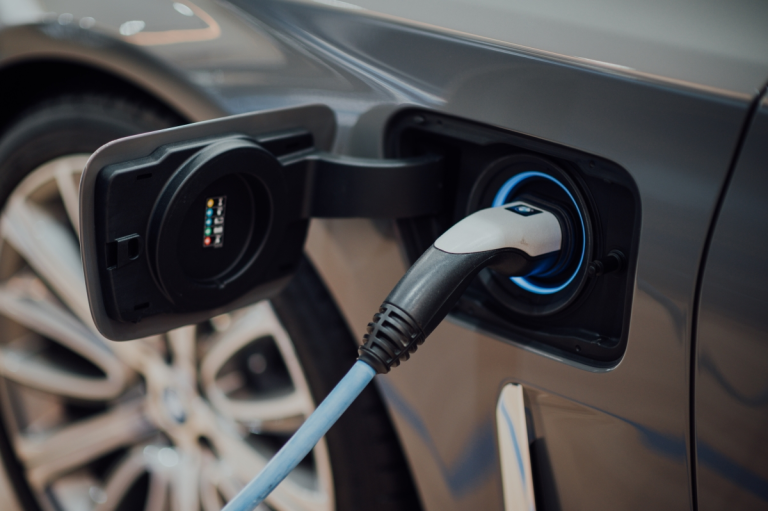
Make sure the used EV is compatible with your home and local public chargers. In the UK, Type 2 connectors and CCS for rapid charging are standard, but older EVs may use CHAdeMO or other types.
 Check:
- Type of charging ports (AC vs. DC)
- Charging speeds supported (kW rating)
- Charging cable availability
You can check the port type of any registered EV for free on Total Car Check.

3. Understand the Real-World Range
An EV’s claimed range and real-world range can differ—especially on older models or those with worn batteries. Cold weather, driving style, and road type all impact efficiency.
 Look at:
- Official WLTP range (find this on the manufacturer’s site)
- Real-world range reviews online
- Current battery state of health (SOH)
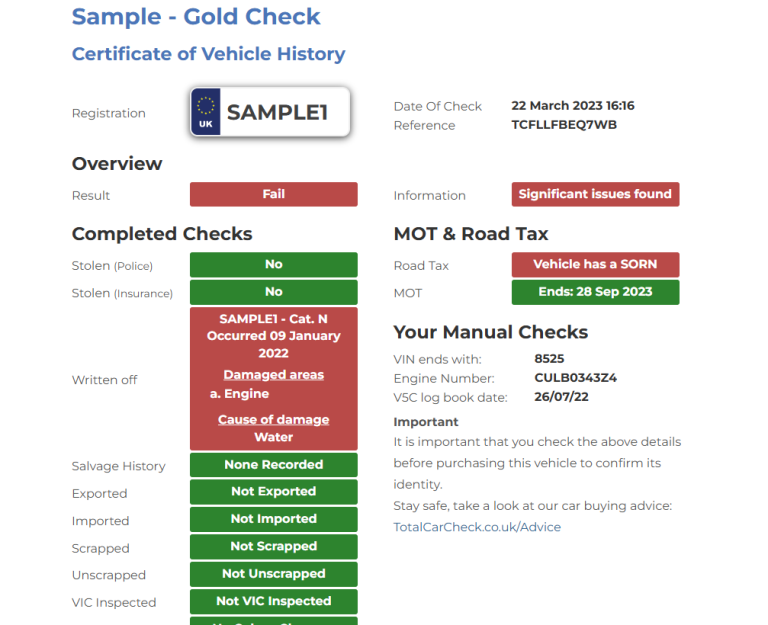
4. Review the Used Electric Car’s History
Just like with any used car, it’s vital to ensure the vehicle:
- Isn’t stolen
- Has no outstanding finance
- Wasn’t written off (e.g., due to water or battery damage)
- Has consistent mileage history
Run a full check with TotalCarCheck.co.uk for all this information and unique insights about any registered EVs including charger type, running costs and battery capacity.
 Read: Why Electric Cars Remain the Future
5. Investigate Software and Firmware Updates
Modern EVs are as much about software as they are about hardware. Older vehicles may need updates to improve range, safety features, or battery management.
 Ask:
Ask:
- Has the software been updated recently?
- Are over-the-air (OTA) updates supported?
- Has the previous owner regularly connected to the manufacturer app?
6. Consider Charging Infrastructure Near You
Check if you have access to convenient charging at home or nearby:
- Can you install a home charger? (Look into the UK OZEV grant scheme)
- Are there rapid chargers nearby? Use apps like Zap-Map or Pod Point
- Does your workplace offer EV charging?

7. Ask About Battery Ownership (Lease or Owned)
Although rare, some older EVs (like early Renault Zoes) come with leased batteries, meaning you pay a monthly fee for the battery even if you own the car.
 Clarify:
- Is the battery owned or leased?
- If leased, how much is the monthly payment?
- What are the terms for ending the lease?
8. Examine the Service History
Even though EVs have fewer mechanical parts, they still require servicing:
- Brake fluid replacement
- Cabin air filter changes
- Tyre rotation
- Battery system checks
Tip: Use TotalCarCheck.co.uk to confirm mileage history and MOT status.